
Finished Floors Designed Around How You Use Them
Custom decorative epoxy flooring in Walton for basements, garages, and hobby spaces that need a finished surface built to a specific look and function
Finished basements and garages in the Walton area are frequently used as living spaces, workshops, or hobby rooms rather than purely as utility areas, and the floor in those spaces carries both functional and visual expectations that a raw concrete slab does not meet. Epoxy Creations LLC designs and installs custom decorative epoxy floors for homes and shops in Walton and the surrounding Delaware County region, with finish options that include flake blends, metallic effects, and solid color systems. The design process happens in person using the shop's flipbook of completed jobs and color samples, so the finish you choose is based on how actual finished floors look in comparable spaces rather than on printed swatches that read differently once installed.
After the on-site design consultation and quote approval, the crew prepares the slab—cleaning the surface, addressing any cracks or imperfections, and grinding the concrete to open its profile for adhesion. The base coat goes down first, the chosen decorative layer is applied and allowed to set, and the top coat seals the entire system. The approach to the decorative layer differs by finish type: metallic finishes require controlled manipulation of the resin as it moves across the surface, flake systems require even broadcast and excess removal, and solid color systems rely on precise base coat application without a broadcast step. Each method is handled by the owner's crew on site.
Set up an on-site design consultation with Epoxy Creations LLC to review finish options and get a quote based on your floor's dimensions and condition.
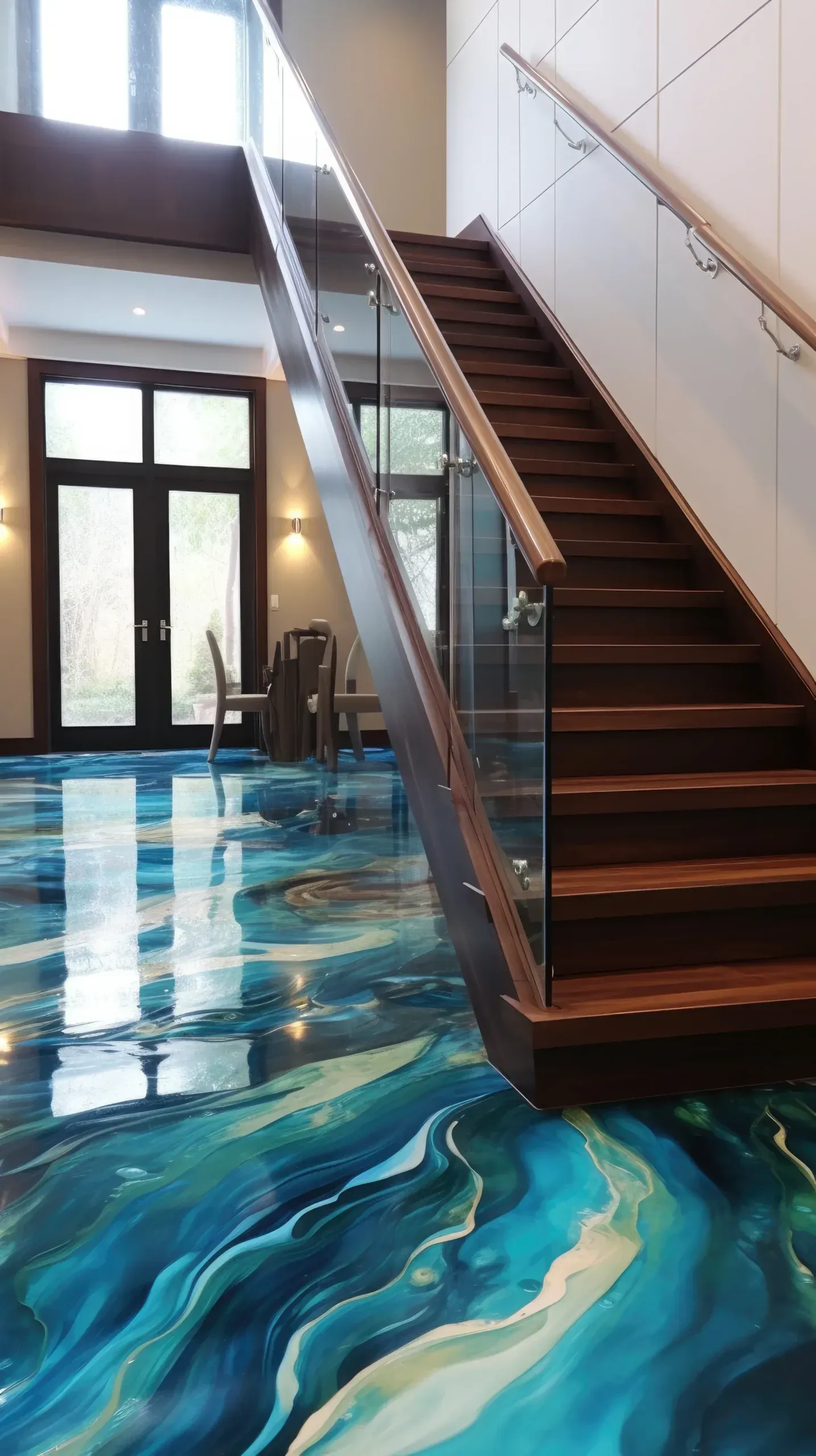
The Difference Between Decorative Finish Types and What Each One Requires
Metallic, flake, and solid color finishes are not interchangeable applications of the same process—each requires a different technique at the decorative layer stage. Metallic epoxy is manipulated while wet using tools or air movement to create depth and variation in the finish, and the result is not fully predictable down to the last detail because the resin moves differently on every slab. Flake systems are broadcast over a wet base coat and the density is controlled by how the material is thrown and how much excess is removed. Solid color systems eliminate the broadcast step entirely and rely on the base coat itself as the visible surface, which means surface preparation has to be more precise because there is no decorative layer to mask minor texture variation.
Once the top coat cures, the decorative layer is protected beneath a sealed, continuous surface that handles foot traffic, equipment rolling, and fluid contact without the finish degrading at the surface level. A metallic floor in a finished basement continues to show depth and color variation under different lighting conditions rather than fading to a flat tone, and a flake floor in a garage maintains its grip texture because the flake profile sits just below the sealed top coat rather than on an exposed surface. Epoxy Creations LLC has built metallic, flake, and custom finishes on completed projects, all documented on the shop's Facebook page for reference.
The design consultation uses the shop's photo flipbook of past jobs rather than printed color cards alone, because the way a metallic or flake finish reads in an actual space is significantly different from how it appears as a small sample. Finish selection happens during the site visit so the color and effect choice accounts for the space's lighting, dimensions, and intended use rather than being made in the abstract.
Questions About Decorative Epoxy Finish Options
The questions below focus on how decorative epoxy systems are selected, applied, and what distinguishes one finish type from another in practice.
How is the finish type selected during the consultation?
The owner reviews the shop's flipbook of completed projects with you on site, which shows how metallic, flake, and solid color finishes look across different floor sizes, lighting conditions, and use cases so the choice is grounded in actual installed results.
What makes a metallic epoxy finish look different from a flake finish once the top coat is applied?
Metallic finishes create depth and tonal variation across the surface because the pigment moves within the resin as it cures, while flake finishes create a textured, multi-color field from broadcast chips embedded under the top coat—the two effects are visually distinct and read differently depending on the space's lighting.
Why does surface preparation matter more for a solid color system than for a flake finish?
Solid color systems have no broadcast layer to mask texture variation, so surface grinding has to bring the slab to a more consistent profile—any high spots or rough patches that remain are visible in the finished coat in a way that a flake broadcast would cover.
How does the decorative layer hold up in a Hancock or Walton-area garage used for regular vehicle traffic?
The decorative layer sits beneath the sealed top coat rather than on the exposed surface, so it is not subject to direct abrasion—the top coat handles the wear load, and the finish beneath it remains intact as long as the top coat is maintained.
What happens during the base coat step that affects how the decorative layer looks?
The base coat color is chosen to complement the decorative layer above it—a white or light base coat makes flake colors appear brighter and metallic finishes more luminous, while a darker base coat shifts the tonal range of the finish, so the base coat selection is part of the design decision, not a default.
Epoxy Creations LLC also installs custom decorative epoxy flooring in Sidney, Oneonta, Stamford, Hancock, and Binghamton. Call (607) 644-2211 to schedule your on-site design consultation and review the shop's completed project portfolio before committing to a finish.