
Concrete Slabs Coated and Ready for Use
Epoxy floor installation in Walton for bare or unfinished concrete slabs that need a durable, sealed surface before they can handle regular traffic
A properly installed epoxy floor begins with the slab condition, not the coating. Epoxy Creations LLC is a family-run epoxy contractor serving Walton and the broader Delaware County area, and every installation starts with an on-site visit to measure the floor and assess what the concrete actually requires before any resin is mixed. Garage and basement slabs in this area were frequently poured without surface preparation for coatings, which means the concrete profile has to be opened mechanically before a base coat will bond—skipping that step is the most common reason epoxy peels within a year of installation.
After the on-site assessment, a written quote is provided and a contract is signed with a deposit covering materials before work begins. The crew prepares the surface, applies the base coat, broadcasts flake if it is part of the design, and seals everything with a top coat. Cure time is confirmed before the floor is returned to use, because putting vehicle or equipment weight on a floor before it has fully cured compresses the coating before it reaches full hardness. Owner-operated crews handle each step directly, so the sequencing and timing decisions stay with the person responsible for the result.
Request an in-person quote from Epoxy Creations LLC to assess your slab and determine which coating system fits your space and how you use it.
How Each Stage of Installation Affects the One That Follows
Surface preparation sets the mechanical bond, the base coat carries the system's adhesion load, and the top coat determines wear resistance and finish. Each layer depends on the one beneath it being fully set and correctly applied—if the surface grind is insufficient, the base coat bonds to concrete dust rather than to the slab, and the entire system lifts from that weak point outward. Epoxy Creations LLC evaluates the slab on site before quoting, which means the preparation scope is determined by what the concrete actually shows rather than by a standard package applied to every job.
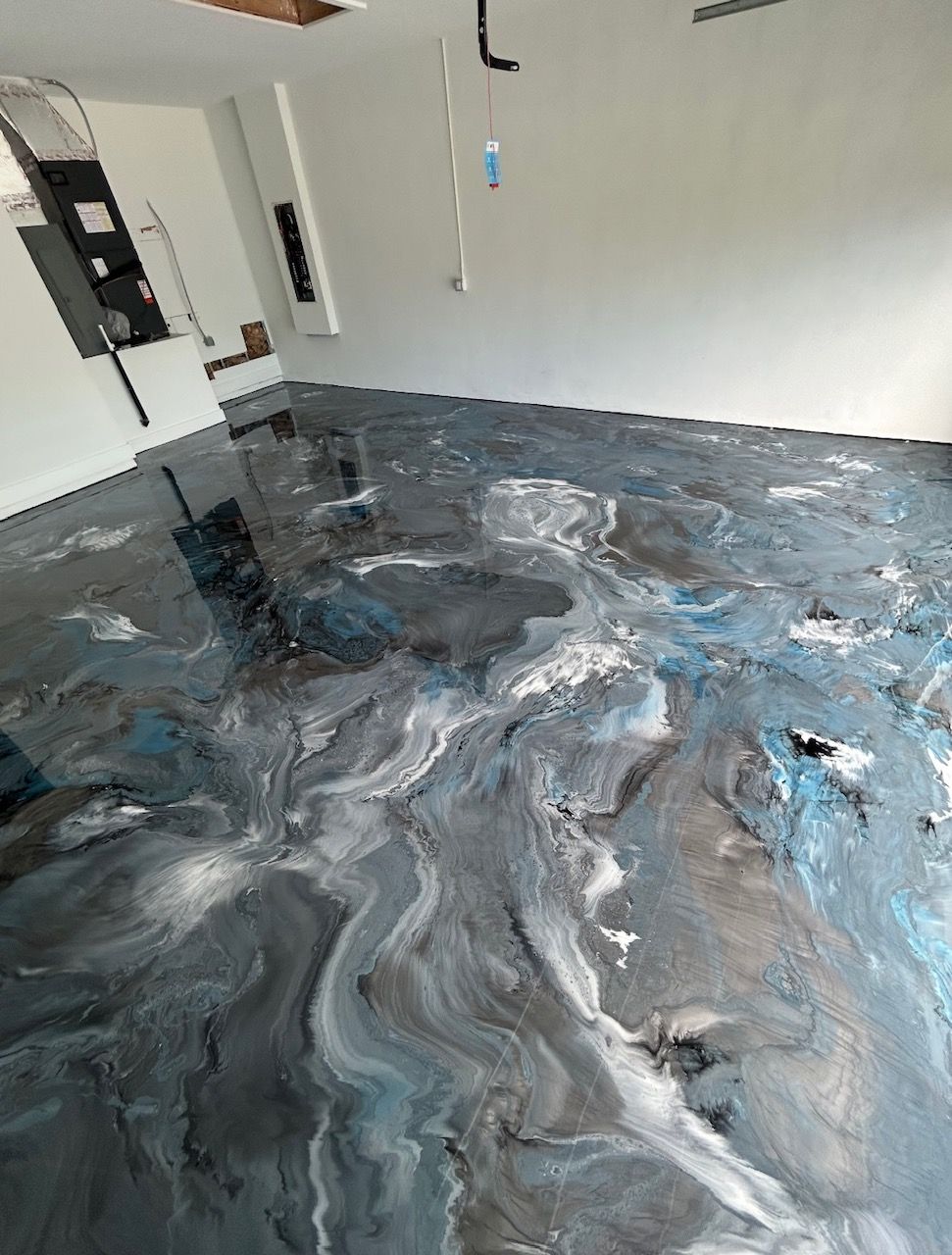
Once installation is complete and the floor has cured, the visible difference from a raw slab is significant: the surface is continuous and sealed rather than porous, minor surface defects are no longer visible, and the floor handles fluid spills by letting them sit on the surface rather than absorbing them. In garage settings, that sealed surface means motor oil, coolant, and transmission fluid can be wiped up rather than soaking into the concrete and leaving permanent staining.
The optional broadcast layer—flake or another decorative medium—is added between the base coat and top coat and does not change the structural layering sequence, but it does affect how the top coat sits and what finish level is achievable. Jobs that include a broadcast layer require the excess to be removed and the layer checked before the top coat goes down. Epoxy Creations LLC has documented finished installations on Facebook across garage and basement settings, which gives a reference point for what the system looks like across different floor sizes and color selections.
What to Know Before Installation Starts
These questions cover the installation process itself—what happens at each stage, what preparation involves, and what the floor looks like once the work is complete.
What does the on-site assessment look at before a quote is given?
The crew measures the floor area, checks the slab for existing coatings, cracks, high spots, and moisture indicators, and determines what surface preparation the concrete needs before any coating will bond correctly.
Why is a deposit collected before installation begins?
The deposit covers the cost of materials ordered specifically for your project, since epoxy components are mixed and applied within a set time window and cannot be returned once purchased for a specific job.
How does the base coat differ from the top coat in what it does?
The base coat is formulated for adhesion to prepared concrete and forms the foundation the entire system sits on, while the top coat is formulated for abrasion resistance, chemical resistance, and the final sheen level.
What happens if flake is part of the installation and how does it fit into the sequence?
Flake is broadcast over the wet base coat, excess is removed once the layer sets, and the broadcast result is checked before the top coat is applied—this sequence ensures the flake is locked in evenly rather than floating unevenly under the final layer.
How do Delhi-area and Walton-area basement slabs typically affect how long preparation takes?
Slabs in older homes throughout Delaware County were often poured in lifts or with finish troweling that closed the surface, which requires more aggressive grinding to open the concrete profile than a newer, rougher slab would need.
Epoxy Creations LLC also installs epoxy floors in Sidney, Oneonta, Stamford, Hancock, and Binghamton. To move forward, call (607) 644-2211 to schedule your on-site measurement and written quote.