
Floors That Hide Flaws and Hold Grip
Flake epoxy flooring in Walton for uneven, previously painted concrete that needs texture and a durable sealed surface
Older garage and basement slabs in Walton and the surrounding Delaware County area were commonly poured without any finish coating in mind, and decades of use leave them with surface inconsistencies, paint residue, and worn patches that make a clean result difficult without the right approach. Epoxy Creations LLC handles flake epoxy flooring for exactly these conditions, broadcasting colored flake over a prepared base coat to mask minor surface irregularities while building in real slip resistance. The finished floor looks intentional rather than patched, and the texture is visible and functional rather than decorative only.
The process starts with an on-site measurement and a color selection from the shop's flake samples, so you know what the floor will look like before any work begins. The slab is cleaned, cracks are filled, and the surface is ground before the base coat goes down. Flake is broadcast evenly across the wet base, excess is removed once set, and the top coat is applied after the flake layer has been inspected. That top coat step is where gloss level and wear resistance are determined, which is why it goes on last under direct review rather than as a mechanical final step.
Arrange an on-site measurement with Epoxy Creations LLC to review your slab condition and pick a flake blend that fits the space.
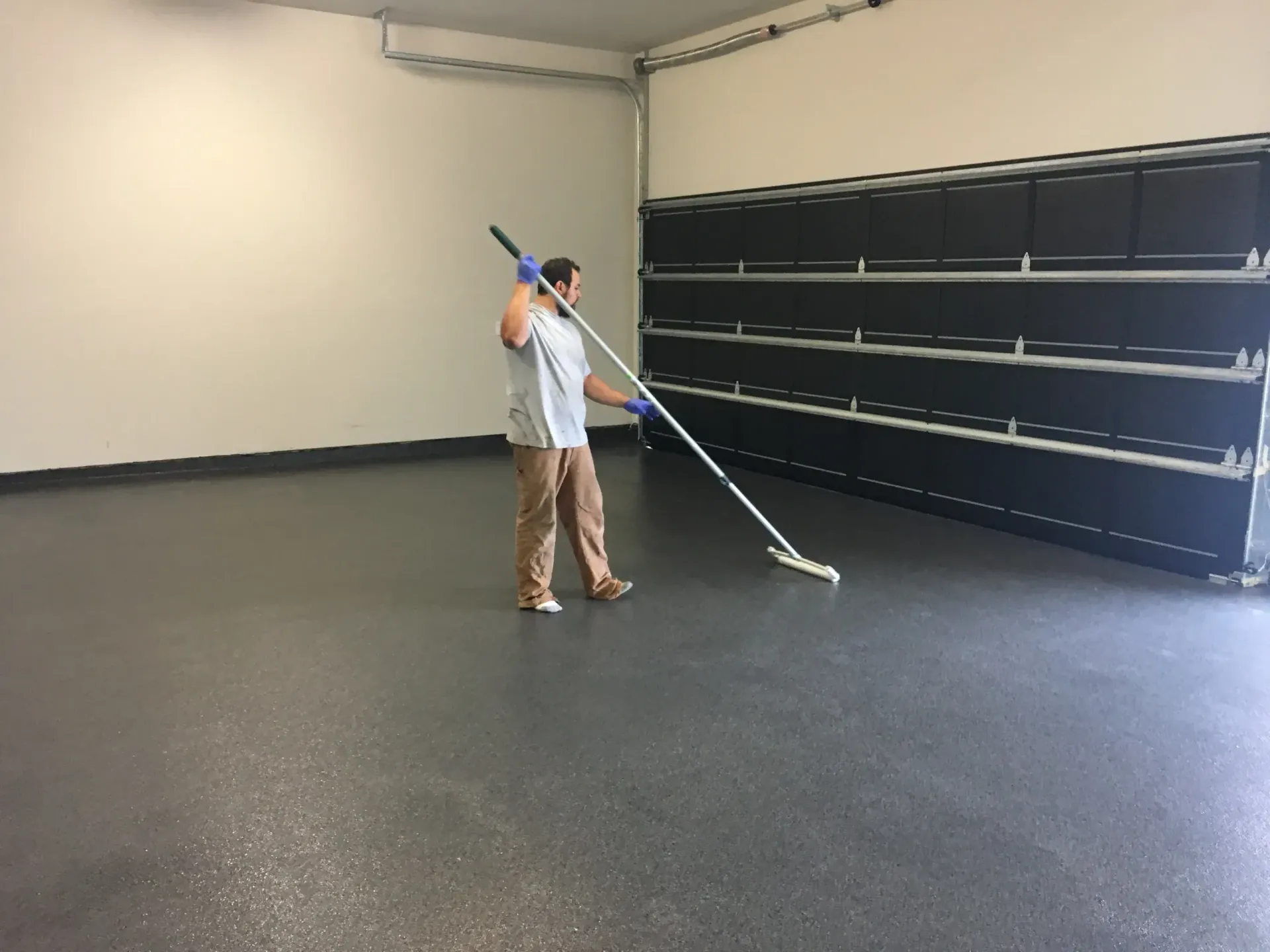
What the Top Coat Step Actually Controls
Flake systems involve three distinct layers, and the top coat is not simply a protective film—it sets the floor's final sheen, determines how much texture remains exposed for grip, and controls how the flake colors read once sealed. Applying the top coat before the broadcast layer has been checked can trap loose flake and create an uneven surface that wears unevenly at high-traffic points like garage entries and stair landings. At Epoxy Creations LLC, the flake is reviewed and any uneven broadcast areas are corrected before the top coat goes down.
Once the system cures, the floor surface reads as a continuous, textured field rather than a painted slab. Small cracks and surface pits that were visible before installation disappear under the flake pattern, and the grip underfoot is noticeably different from bare or painted concrete—particularly in a garage where fluid drips or dust accumulation would otherwise make the floor slick. The color blend you chose from the sample set is what you see once the top coat clears.
Flake density and color proportion can be adjusted to favor one dominant tone or to create a more blended, multi-color field, and that decision is made during the on-site consultation rather than at the time of installation. Every completed job is documented on the shop's Facebook page, which gives you a reference point for how different blends look in actual garage and basement settings rather than on a sample chip.
Questions About How Flake Flooring Works
These questions address the flake epoxy installation process specifically, including how the layers are applied, what preparation involves, and what the finished floor looks and feels like.
What happens to the concrete before the base coat goes down?
The slab is cleaned to remove any existing paint, oil, or contamination, cracks are filled, and the surface is ground so the base coat bonds to exposed concrete rather than to an existing layer that could separate.
How is the flake broadcast evenly across a large floor?
Flake is thrown by hand across the wet base coat in overlapping passes, and the density is checked before the coat sets—areas that received too little are filled in before the layer cures.
Why does the top coat go on after the flake is checked rather than immediately after broadcast?
Loose or uneven flake embedded under a top coat creates high spots that wear faster and can feel rough underfoot, so confirming the broadcast layer first prevents those problems from being sealed in permanently.
What does the floor feel like once the top coat has cured?
The surface has visible texture from the flake profile beneath the top coat, which provides grip that bare or painted concrete does not, and the sealed surface resists staining from fluids rather than absorbing them.
How do older Walton-area slabs affect the preparation step?
Many basement and garage slabs in the area were poured in eras when surface finishing for coatings was not standard, so grinding is almost always necessary to open the concrete profile and give the base coat a mechanical bond rather than relying on adhesion alone.
Epoxy Creations LLC also installs flake epoxy flooring in Sidney, Oneonta, Stamford, Hancock, and Binghamton. To see completed flake floor examples before scheduling, review the shop's documented jobs on Facebook, then contact Epoxy Creations LLC directly at (607) 644-2211 to set up an on-site measurement and sample review.