
Cracked Slabs Rebuilt Before Coating Goes Down
Epoxy floor repair and resurfacing in Walton for cracked, pitted, or worn concrete that needs structural correction before a new surface will hold
Covering damaged concrete without repairing it first is what causes resurfaced floors to fail—the coating bridges the crack temporarily, then flexes and separates as the crack moves. Epoxy Creations LLC repairs cracked, pitted, and worn concrete floors in Walton and the surrounding Delaware County area before any epoxy layer goes down, which means the finished surface bonds to sound material rather than to compromised concrete underneath. An on-site inspection drives every repair scope because the type and depth of damage determines which fill and grinding approach the slab actually needs.
Garage and basement slabs in older homes throughout this area carry decades of vehicle weight, equipment loading, and general use that leave cracks and worn patches that no topical coating alone will fix permanently. After inspecting the slab, the crew cleans the surface, grinds down high spots, and fills cracks and imperfections before any epoxy is mixed. Repairs are completed and verified before the base coat goes down, so the new coating is bonded to concrete that has been returned to a level, stable condition. The finished floor is visibly continuous—cracks that were open and visible before the work are filled, ground flush, and sealed under the coating rather than painted over.
Schedule an on-site inspection with Epoxy Creations LLC to review the specific damage your slab has and determine what repair sequence it requires before resurfacing.
Why Repairs Are Completed Before Any Coating Is Applied
Crack filler and epoxy have different flexibility characteristics, and the sequence in which they are applied matters for long-term adhesion. Filling a crack after the base coat is already down means the filler is sitting on top of a cured resin layer rather than bonding directly to concrete—that interface is mechanically weaker than filler bonded to raw slab material. At Epoxy Creations LLC, all concrete repairs are completed and ground flush before the first epoxy layer is mixed, which ensures the coating system sits on a uniform surface from one edge to the other.
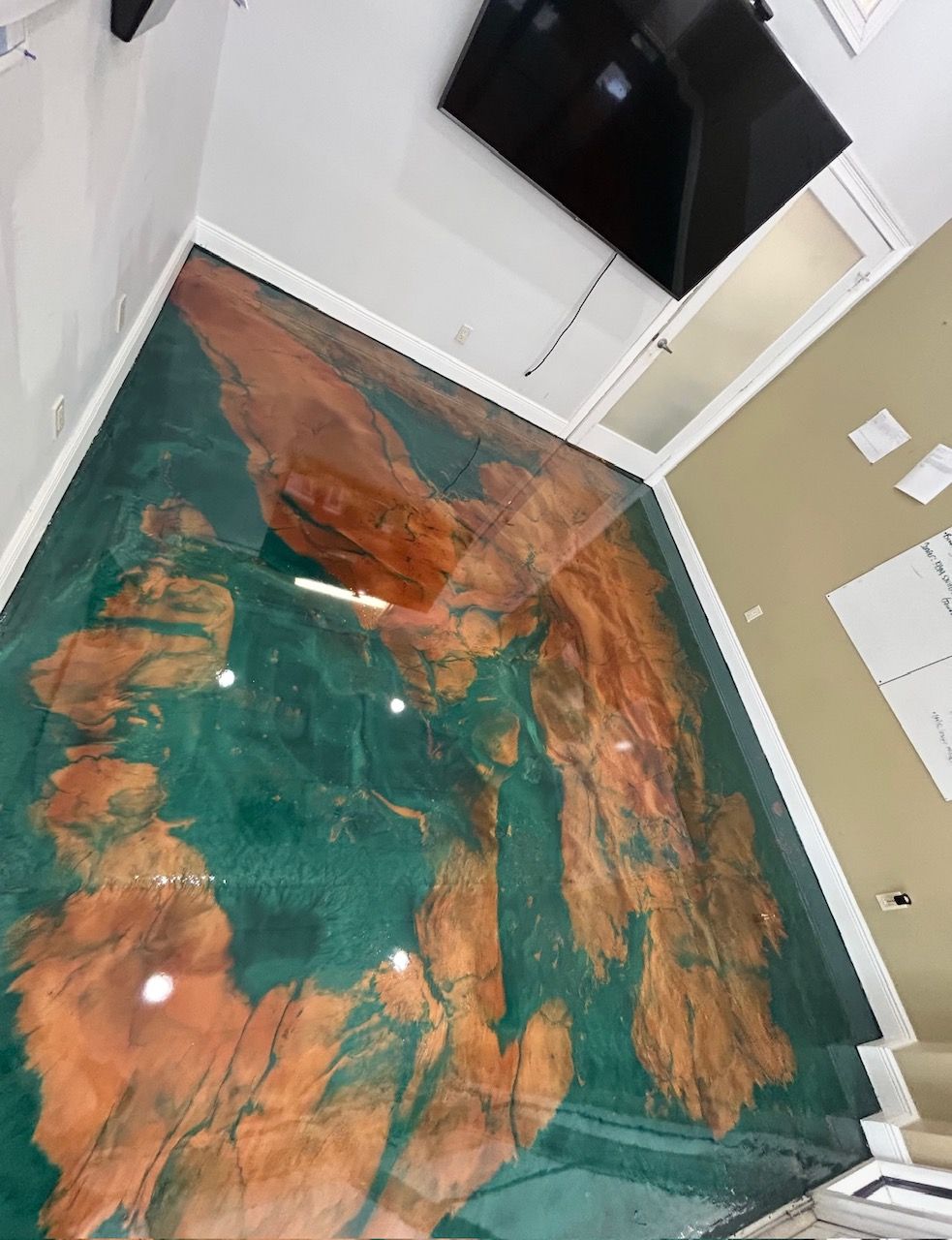
Once the repair and resurfacing sequence is complete, the floor reads as a single continuous surface rather than a patched slab. Cracks that were catching dirt, creating trip hazards, or allowing moisture to wick through the slab are filled and sealed, and the top coat over the repaired surface handles the same traffic load as the surrounding floor rather than being a thin bridge over a void. In garage settings specifically, a properly repaired and resurfaced slab no longer collects debris in open cracks or shows the stress lines that make a floor look deteriorated even after cleaning.
The repair scope varies significantly by slab condition—a floor with surface pitting requires a different approach than one with structural cracks that have shifted, and the on-site inspection determines which applies. Epoxy Creations LLC documents completed repair and resurfacing jobs on Facebook, which shows the before-and-after condition across different damage types and slab ages rather than presenting only finished results.
How the Repair and Resurfacing Process Works
The questions below address what happens at each stage of a repair and resurfacing project, including how damage is assessed, what preparation involves, and what the floor looks like when the work is finished.
How does the inspection determine what repair method the slab needs?
The crew looks at crack width, depth, and whether the edges have shifted relative to each other—a crack where one side is higher than the other needs grinding before filling, while a hairline crack in a stable slab requires a different filler consistency and approach.
What does grinding high spots accomplish before the epoxy goes down?
Grinding brings the surface to a consistent plane so the coating applies at a uniform thickness—high spots in an unground slab cause the base coat to thin out over them, which is where delamination typically starts under traffic load.
Why are repairs completed before the base coat rather than after?
Filler bonds more reliably to raw concrete than to a cured resin surface, and completing repairs first means the base coat covers both the original slab and the filled areas in a single pass rather than requiring a secondary adhesion step.
What does the resurfaced floor look like once the top coat has cured?
Filled cracks are no longer visible at the surface, the floor is level and continuous, and the sealed top coat prevents new contamination from penetrating the concrete the way an open, pitted slab allows.
How do Walton-area slabs that have had previous coatings applied affect the repair process?
Old paint or failed coatings have to be fully removed before repairs can be made to the concrete beneath them, since filling a crack through a layer of degraded paint means the filler is not in contact with the concrete at all.
Epoxy Creations LLC also performs epoxy floor repair and resurfacing in Sidney, Oneonta, Stamford, Hancock, and Binghamton. Call (607) 644-2211 to set up an inspection and get a written quote based on your slab's actual condition.